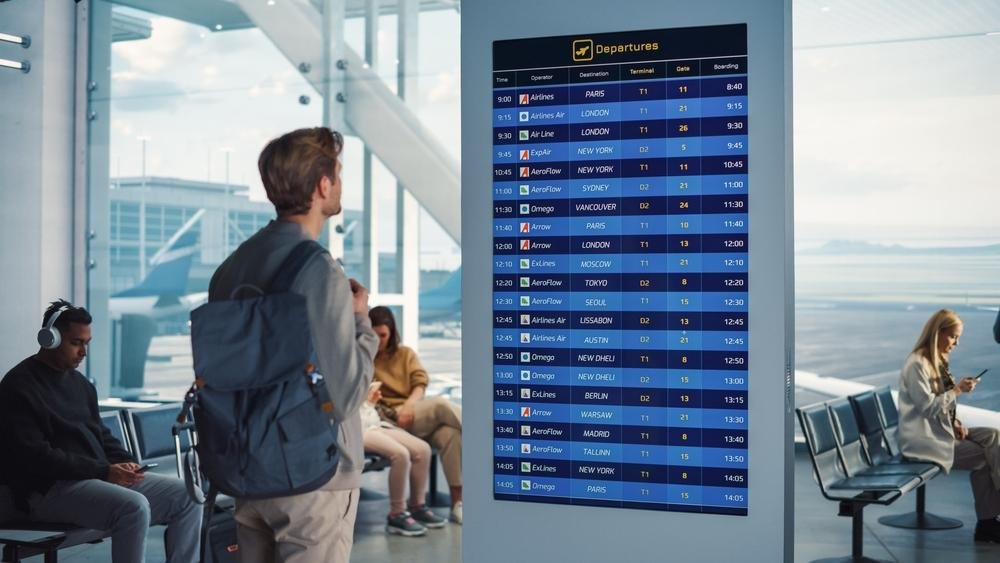
The flight cuts are not a single past event. Schedules are still shifting week to week — which means the price on your screen may already be out of date.
The cuts are not over — they are still moving
The flight cuts in Southeast Asia are often described as if they happened once and settled. They did not. Schedules are still shifting from one week to the next, and that ongoing movement — not the first round of cuts — is what makes booking right now genuinely tricky.
The background is by now familiar: a crisis in the Middle East pushed up fuel and operating costs, and airlines responded by cutting flights. But the cuts did not arrive in one clean announcement. According to schedule data from OAG, a company that tracks flights, airlines revised their plans again and again, week after week, as costs kept shifting under them.
For travelers, that constant revision has a quiet, practical consequence. Flight times move. Seat counts change. Prices adjust. A route that showed three options this morning may show one this afternoon, and a fare that was real yesterday may already be gone. The market is not only smaller than last year; it is unsettled, changing faster than most travelers realize while they browse.
The real risk in a market like this hides inside something travelers take for granted: the assumption that the price on the screen is true. When schedules change this often, any booking site can fall behind the airlines it draws from, and when it does, it fails in one of two directions.
Sometimes it shows a seat that is already gone. A traveler books with confidence, and the booking collapses into a cancellation and a refund. Other times it is slow to show a flight that was just added back, or a price that just dropped, so the traveler never learns the better option existed and pays more than they needed to. Both problems come from the same gap — the distance between what is real and what a slow system is still displaying — and in a fast-changing market that gap can open in a matter of hours.
What actually helps, and why
Closing that gap is, in plain terms, the job — and at Airpaz it falls to John Wang, Chief of Architecture, whose teams work to keep the information travelers see in step with a market that will not sit still. He is blunt about why it is harder than it sounds.
“People assume showing an accurate price is simple — the airline has a number, we show it,” he says. “On a quiet day, that is roughly true. But we pull live information from hundreds of airlines, and each one runs its own systems, updates on its own schedule, in its own format. When dozens of them are changing flights at the same time — adding, cutting, repricing — we have to catch every one of those changes and reflect it before you act on old data. When the market moves this fast, the difficulty does not just add up, it multiplies.”
That, he says, is where Airpaz concentrates its effort in a period like this.
“Our focus here is unglamorous, and I am fine with that,” he says. “We work to keep what we show you current — to reconcile all those feeds quickly, all the time — because that is the part that actually matters when you are about to book. When seats are scarce, a price you can rely on is worth more than any flashy feature, so that is where we put our energy: making sure the number in front of you is real right now, not real an hour ago.”
What this leaves for the traveler
For a traveler, none of this reduces to a single button to press. It comes down to what to trust — and here the honest picture matters. No system, Airpaz’s included, can keep perfect pace with a market changing by the hour, and none can predict where prices are heading or slow the changes down. What a well-built system can do is stay close enough to reality that the price on the screen is one a traveler can actually act on. In a season like this, that is worth as much as the price itself: a fare that is slightly higher but genuinely available beats a lower one that vanishes at the last step.
Southeast Asia’s schedules will keep moving for as long as the costs behind them stay high. Through all of it, whether a booking goes smoothly rests on something a traveler never sees — whether the number on the screen has kept pace with a market that refuses to sit still.

Ava Mitchell turns celebrity facts into smart, scroll-worthy stories at Star Ledger Pro, backed by 3 years of experience.


