The media and entertainment industry has undergone a fundamental transformation over the past decade. The shift from traditional broadcasting to digital-first distribution has dramatically increased the volume, variety, and velocity of content being produced. Broadcasters, OTT platforms, sports organizations, news agencies, production houses, and enterprises now manage thousands of hours of video across multiple formats, resolutions, and distribution channels.
At the same time, audience expectations have evolved. Consumers demand high-quality content delivered instantly across devices, while content teams are expected to publish faster, personalize experiences, and maintain operational efficiency. Meeting these expectations requires far more than simply expanding storage capacity. Organizations need intelligent infrastructure capable of managing the complete content lifecycle from ingestion and processing to collaboration, distribution, and archival.
Cloud-native architectures have emerged as the preferred foundation for modern media workflows, providing the scalability, flexibility, and performance required to support today’s production environments.
The Challenge of Growing Content Volumes
Modern production pipelines generate enormous amounts of data. A single project may include raw footage, edited sequences, visual effects, graphics, subtitles, metadata, multiple language versions, promotional assets, and final masters. With higher-resolution formats such as 4K, 8K, HDR, and immersive media becoming increasingly common, storage requirements continue to grow rapidly.
Traditional on-premises infrastructure often struggles to keep pace with these demands. Capacity planning becomes complex, hardware refresh cycles are expensive, and scaling infrastructure for peak production periods leads to underutilized resources during quieter months.
Cloud infrastructure eliminates these constraints by providing elastic compute and storage resources that can scale dynamically according to production requirements.
Accelerating Production Through Centralized Workflows
Media production is inherently collaborative. Editors, animators, VFX artists, producers, sound engineers, compliance teams, and marketing departments frequently work on the same content simultaneously. When assets are stored across disconnected systems, collaboration slows down, version control becomes difficult, and duplicate files proliferate.
Cloud-native workflows centralize content repositories. Teams can review edits, approve changes, and collaborate in real time without transferring large files between offices.
This centralized approach significantly reduces production delays while improving consistency across projects.
AI Is Transforming Content Operations
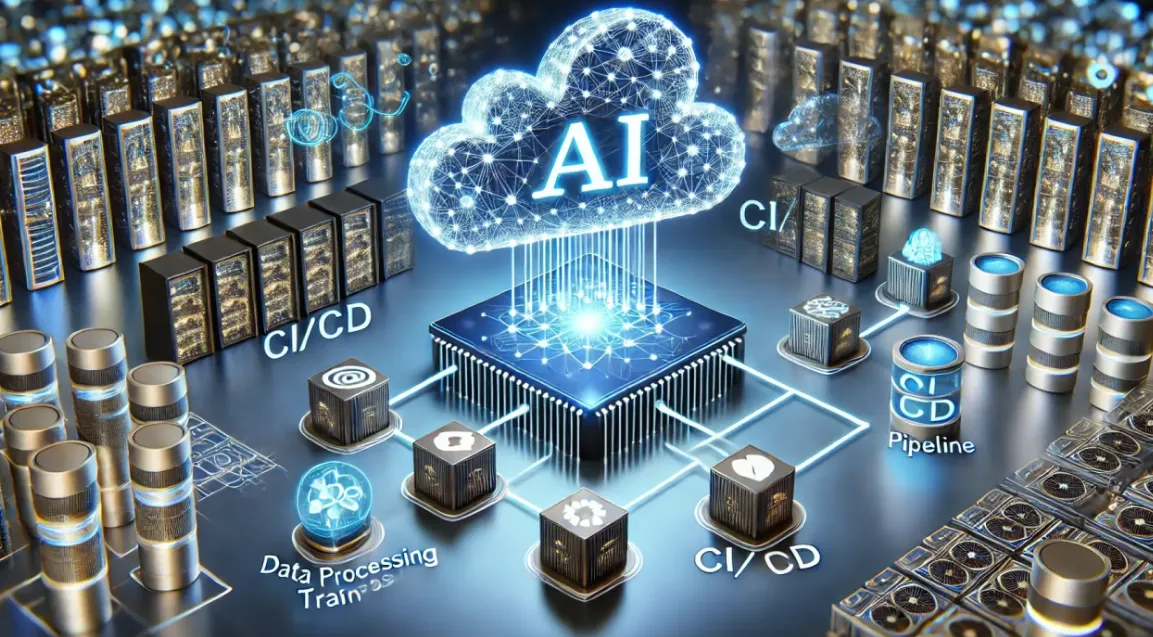
Artificial intelligence is reshaping nearly every stage of media production. Automated speech-to-text transcription, object recognition, scene detection, facial recognition, subtitle generation, content moderation, metadata enrichment, and recommendation engines all rely on significant computing resources.
Running these AI workloads alongside production applications requires infrastructure capable of supporting both GPU-intensive processing and high-performance storage.
Cloud-native platforms allow organizations to provision AI resources on demand, ensuring that compute capacity aligns with workload requirements instead of remaining permanently allocated.
As AI models continue to evolve, organizations gain the flexibility to adopt new capabilities without redesigning their underlying infrastructure.
Faster Distribution Across Multiple Platforms
Content rarely reaches audiences through a single channel anymore. A single production may be distributed across OTT platforms, television networks, social media, websites, mobile applications, and regional broadcasters.
Each destination often requires different codecs, resolutions, bitrates, aspect ratios, subtitles, and metadata standards. Manual processing creates bottlenecks and increases the likelihood of errors.
Automated cloud workflows simplify this process by enabling large-scale transcoding, packaging, quality control, and publishing. Parallel processing significantly reduces turnaround times while ensuring consistent delivery across every platform.
An integrated ovp solution further streamlines publishing by enabling organizations to securely distribute, manage, and monetize video content across multiple digital channels from a unified platform.
Security Cannot Be an Afterthought
Media assets represent valuable intellectual property. Unauthorized access, piracy, accidental deletion, or data loss can have substantial financial and reputational consequences.
Cloud-native environments incorporate multiple layers of security, including identity and access management, encryption, role-based permissions, audit logging, immutable backups, and disaster recovery capabilities.
Organizations can also implement granular governance policies that define who can access, edit, distribute, or archive content throughout its lifecycle.
Smarter Asset Organization Improves Productivity
As content libraries continue to expand, locating the right files becomes increasingly difficult without structured organization. Searching through thousands of folders manually wastes valuable production time and often results in duplicated work.
Modern platforms use metadata, AI-powered tagging, automated indexing, and intelligent search capabilities to make content instantly discoverable. Editors can locate clips based on dialogue, objects, people, locations, or custom metadata rather than relying solely on filenames.
A robust media asset management platform ensures that every asset remains searchable, version-controlled, and accessible throughout its lifecycle while reducing operational complexity.
Preparing Infrastructure for Future Media Workloads
Emerging technologies such as virtual production, real-time rendering, volumetric video, immersive experiences, and generative AI are significantly increasing infrastructure demands. Future media workflows will require even greater compute density, lower latency, faster storage, and more intelligent automation.
Organizations investing in cloud-native architectures today are better positioned to adopt these innovations without major infrastructure overhauls. Instead of continuously expanding physical hardware, they can leverage scalable compute, high-performance networking, and distributed storage that evolve alongside changing production requirements.
The future of media operations will depend on infrastructure that combines flexibility, automation, AI readiness, and operational resilience. By modernizing content workflows now, organizations can improve production efficiency, accelerate content delivery, reduce operational costs, and build a foundation capable of supporting the next generation of digital media experiences.

Ava Mitchell turns celebrity facts into smart, scroll-worthy stories at Star Ledger Pro, backed by 3 years of experience.


