The Science of Natural Breast Fat Transfer Bay Area Patients Choose
For those seeking a natural approach to breast enhancement, fat transfer breast augmentation has emerged as a sophisticated and popular option. This innovative procedure offers a unique advantage by utilizing a woman’s own body fat, harvested from areas like the abdomen or thighs, to subtly enhance breast volume and shape. The dual benefit of body contouring from the fat removal and natural breast augmentation has made it an appealing choice for many.
Unlike traditional implants, fat transfer provides a softer, more natural feel and look, often appealing to individuals who prefer an implant-free solution. For patients exploring options for natural breast fat transfer Bay Area wide, understanding this procedure is key to making informed decisions about their aesthetic goals.
This comprehensive guide will delve into every aspect of fat transfer breast augmentation. We will explore how the procedure works, who makes an ideal candidate, how much fat can realistically be transferred, and what results to expect. We will also cover the recovery process, potential risks, and how fat transfer compares to breast implants. By the end, you’ll have a clear understanding of whether this natural enhancement method aligns with your personal aspirations.
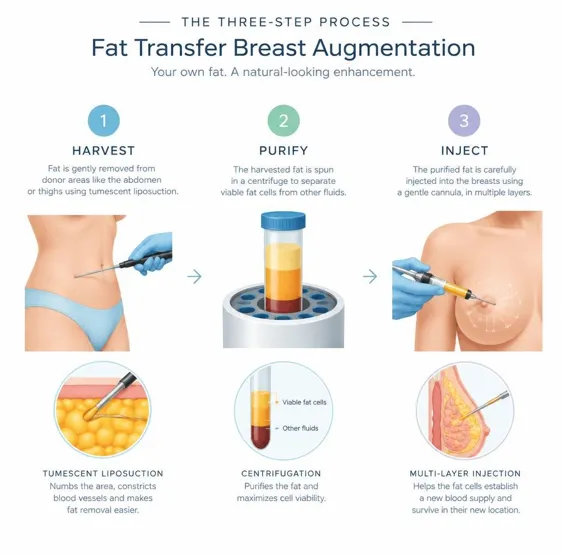
Fat transfer breast augmentation, also known as autologous fat grafting, is a three-stage surgical procedure that leverages the body’s own resources for enhancement. The process begins with the careful extraction of fat cells from donor areas, followed by their meticulous purification, and finally, their precise injection into the breasts. This method is favored by many seeking a natural augmentation in regions like the Bay Area due to its ability to create subtle, harmonious results.
The success of fat transfer hinges on several critical scientific principles. Donor harvesting involves tumescent liposuction, a technique that uses a diluted local anesthetic solution to numb the area, constrict blood vessels, and make fat removal easier and less traumatic. Once harvested, the adipose tissue undergoes centrifugation purification, a process where the fat cells are spun at high speeds to separate viable fat cells from blood, oil, and anesthetic fluid. This step is crucial for maximizing cell viability and reducing complications. The purified fat is then carefully injected using a gentle cannula, a thin, blunt-tipped tube, into multiple layers of the breast tissue. The goal is to ensure optimal vascular integration, allowing the transferred fat cells to establish a new blood supply and survive in their new location. For those considering this advanced procedure, understanding the detailed steps is essential, and reputable practices specializing in natural breast fat transfer Bay Area are well-versed in these techniques.
Liposuction Harvesting and Adipose Purification
The initial phase of fat transfer breast augmentation involves liposuction to harvest fat cells. Common donor sites include areas with ample fat deposits, such as the abdomen, thighs, and flanks. The selection of donor sites not only provides the necessary fat but also offers the added benefit of contouring these areas, resulting in a slimmer silhouette.
During the harvesting process, surgeons use gentle suction techniques to minimize trauma to the delicate fat cells. This is vital because the integrity of the fat cells directly impacts their survival rate once transferred. After extraction, the harvested fat is prepared for transfer through a rigorous purification process. This typically involves decantation, where the fat is allowed to settle, separating the denser fat cells from the lighter fluids. Further purification may include washing with saline solution to remove any remaining blood or anesthetic, and filtration to isolate the most viable fat cells. The objective is to obtain a concentrated sample of healthy, intact adipocytes (fat cells) ready for grafting. This meticulous preparation is a cornerstone of successful fat transfer, ensuring that only the highest quality cells are used for augmentation.
Multi-Planar Micro-Droplet Injection Techniques
Once purified, the fat is ready for injection into the breasts. The technique used for injection is paramount to the survival of the transferred fat. Surgeons employ a multi-planar micro-droplet injection approach, meaning small aliquots (tiny droplets) of fat are injected into various layers of the breast tissue. This includes the subcutaneous plane (just beneath the skin), the subglandular plane (under the breast glandular tissue), and sometimes the intramuscular plane (into the chest muscle).
This method is critical for several reasons. By distributing the fat in small, dispersed amounts, each fat cell has a better chance of accessing recipient vascularization—developing a new blood supply from the surrounding tissues. This revascularization process is essential for the long-term survival of the fat graft. Injecting too much fat in one area, or in large boluses, can lead to tissue ischemia (lack of blood supply), which starves the fat cells and causes them to die. Over-injection can also increase the risk of complications such as oil cysts, calcifications, and fat necrosis. The careful, layered injection technique thus maximizes the survival rate of the transferred fat, contributing to a smoother, more natural-looking result and minimizing potential complications.
Candidate Suitability and Correcting Breast Asymmetry
Determining who is a good candidate for fat transfer breast augmentation involves a thorough assessment of several factors, including body composition, weight stability, and realistic expectations. The procedure is particularly effective for individuals seeking subtle to moderate volume increases and for correcting breast asymmetry. Many women naturally possess a slight difference in breast size or shape, often ranging from a ten to twenty percent variance. For some, this asymmetry can be more pronounced, causing self-consciousness or clothing fit issues.
Fat transfer can address various forms of asymmetry, whether it’s developmental variance where one breast grew larger during puberty, or conditions like Poland’s syndrome or tuberous breast deformity. It can also be used to restore balance after asymmetric involution caused by preferential one-sided breastfeeding, or to correct irregularities following lumpectomy or uneven breast implant placement. The goal is not necessarily perfect anatomical symmetry, which is rarely achieved even in natural breasts, but rather improved visual harmony and balance.
Natural Breast Fat Transfer Bay Area Candidacy and Body Requirements
Ideal candidates for fat transfer breast augmentation typically meet specific criteria to ensure both safety and optimal results. A crucial requirement is having sufficient donor fat available from areas like the abdomen, thighs, or flanks. This means individuals generally need to have a stable body mass index (BMI) above 19, as those who are very thin (e.g., BMI below 19) may lack adequate donor fat for a single-stage correction. In such cases, staged grafting, weight gain, or alternative augmentation methods might be considered.
Beyond donor fat availability, candidates should be non-smokers, as smoking can significantly impair healing and fat graft survival. They must also be in good general health and receive medical clearance from their primary care physician. A baseline mammogram is often recommended prior to the procedure to establish a clear imaging record of the breast tissue. Realistic expectations are also paramount; patients should understand that fat transfer typically results in a modest increase of one to two cup sizes and that absolute perfection in symmetry is not the goal. A comprehensive consultation with a board-certified plastic surgeon is essential to evaluate individual suitability and discuss personalized treatment plans.
Addressing Natural Asymmetry and Volume Deficits
Breast asymmetry is a common concern, with most women experiencing a natural baseline difference of ten to twenty percent in breast size or shape. When this difference becomes more noticeable or causes distress, fat transfer breast augmentation offers a tailored solution. The procedure can effectively correct mild to moderate breast asymmetry by selectively augmenting the smaller breast. This is achieved by harvesting fat from other areas of the body and precisely injecting it into the deficient breast, adding volume and improving contour.
The aim of fat transfer in correcting asymmetry is to achieve a level of visual balance that enhances overall body harmony, rather than striving for absolute identicalness. A symmetry level of about 80-90% is generally considered sufficient for a harmonious aesthetic result. In some cases, especially with more significant asymmetry, a unilateral grafting approach may be used, focusing solely on augmenting the smaller breast. For complex cases, a hybrid approach might be considered, combining fat grafting on the smaller side with a minor lift or reduction on the larger side to achieve optimal balance. It’s important for patients to understand that while fat transfer can significantly improve unevenness, it cannot alter skin tone, stretch marks, pigmentation, nipple position, or underlying skeletal abnormalities without adjunct procedures.
Comparing Fat Grafting to Traditional Breast Implants
When considering breast augmentation, patients often weigh the benefits of fat grafting against traditional breast implants. Both methods aim to increase breast volume and improve shape, but they differ significantly in their approach, materials, and outcomes.
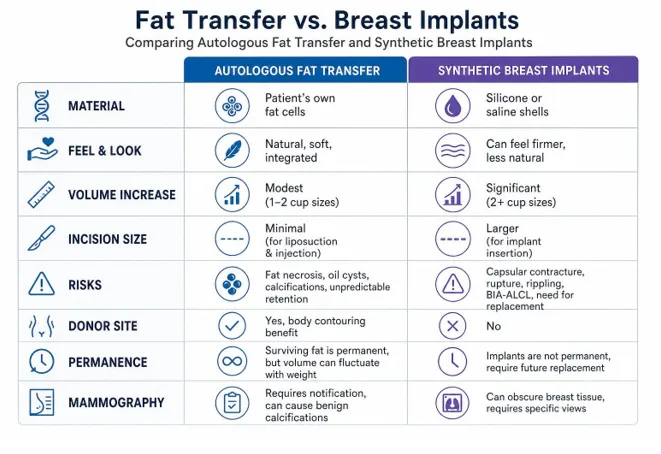
Fat grafting utilizes the body’s own tissue, offering a natural feel and appearance. Because it uses autologous fat, there is no risk of rejection or allergic reaction to a foreign body. The incisions for fat transfer are minimal, primarily for liposuction and small injection points, leading to very discreet scarring. Conversely, breast implants involve placing silicone or saline-filled shells into the breast. While implants can achieve a more substantial increase in cup size (often more than two sizes in a single session), they come with potential risks such as capsular contracture (scar tissue hardening around the implant), implant rupture, and the need for future replacement surgeries. The presence of a foreign material also means a different feel compared to natural breast tissue.
Volume Limits and Longevity Comparison
One of the key distinctions between fat grafting and implants lies in the achievable volume increase and the longevity of the results. Fat transfer breast augmentation typically results in a modest increase of one to two cup sizes. This is due to the biological limits on how much fat can be safely and effectively transferred in a single session. Injecting beyond approximately 150 to 300 milliliters of purified fat per breast per session risks compromising the survival of the fat cells, leading to complications like tissue ischemia, oil cysts, calcifications, and fat necrosis. For individuals seeking a more significant change in breast volume, implants may be a more suitable option, or fat transfer might require multiple, staged sessions.
The longevity of fat transfer results is often a point of interest. The fat cells that successfully revascularize and establish a new blood supply within the first six weeks are considered permanently integrated into the breast tissue. These surviving fat cells behave like native breast tissue, fluctuating with weight changes and pregnancy. While about one-third of transferred fat cells may not survive the initial grafting process, whatever volume remains after approximately four weeks is generally considered permanent. In contrast, prosthetic implants are not permanent devices; they typically have a lifespan and may require replacement due to rupture, capsular contracture, or patient preference over time.
Diagnostic Safety and Mammography Considerations
For women undergoing breast augmentation, diagnostic safety and future mammography considerations are important aspects to discuss with their surgeon. Both fat transfer and breast implants can impact breast imaging, and it’s crucial for patients to be aware of these considerations.
With fat transfer, the presence of transferred fat can sometimes lead to the formation of benign microcalcifications or oil cysts, which are non-cancerous but can appear on mammograms. While these are typically harmless, it is essential for patients to inform future mammography technicians and radiologists about their fat grafting history. This allows imaging specialists to accurately interpret the mammogram results and differentiate between normal post-grafting changes and any potential concerns. Specialized imaging techniques or additional views may be required to ensure thorough breast surveillance.
Breast implants also present unique challenges for mammography, as they can obscure some breast tissue, potentially making it harder to detect abnormalities. Radiologists often use specific implant displacement views to move the implant out of the way, allowing for better visualization of the breast tissue. Regardless of the augmentation method, maintaining regular breast health screenings and openly communicating with healthcare providers about any breast procedures are best practices for ensuring comprehensive diagnostic safety.
Recovery Timeline and Realistic Long-Term Outcomes
The recovery process following fat transfer breast augmentation involves managing discomfort, adhering to post-operative instructions, and allowing the body time to heal and for the transferred fat to settle. The procedure itself can take up to four hours to complete under general anesthesia, after which patients will typically spend some time in recovery before being cleared to go home.
Immediately after surgery, patients can expect some swelling, bruising, and discomfort in both the donor areas (where liposuction was performed) and the breasts. Light activity is generally encouraged to promote circulation, but strenuous exercise and heavy lifting must be avoided. A compression garment is usually worn on the donor sites to help reduce swelling and promote skin retraction, and a supportive bra is recommended for the breasts. The initial downtime stages involve resting and gradually increasing activity levels. Adhering to the compression protocol and avoiding direct pressure on the treated areas are crucial for optimizing fat graft survival and achieving the best possible aesthetic outcome.
Natural Breast Fat Transfer Bay Area Recovery and Fat Retention Rates
Recovery from fat transfer breast augmentation in areas like the Bay Area typically allows many patients to return to daily life about a week after surgery. However, full recovery and the final settling of the transferred fat can take about a month. The long-term success of the procedure is heavily dependent on fat retention rates. Scientific studies, such as a 2024 MRI study, have shown fat retention settling around 46% after three years, while another review of 25 studies found retention closer to 54%.
However, individual results can vary significantly. In clinical experience, when patients diligently follow post-operative instructions, fat retention can reach around 80%. These instructions often include maintaining a stable weight, avoiding pressure on the breasts, and refraining from smoking. The surviving vascularized adipocytes (fat cells) that establish a new blood supply will remain permanently, behaving like native breast tissue. However, any significant weight fluctuations (e.g., 5 to 10 kilograms or more) can noticeably affect the volume of the transferred fat, as these cells will grow or shrink with the rest of the body’s fat.
Post-Operative Timeline and Activity Milestones
The recovery journey after fat transfer breast augmentation progresses through several key milestones:
- Week One: Most patients can resume desk-based work and light daily activities. Swelling and bruising are typically at their peak during the first few days and gradually begin to subside. Compression garments for donor sites and a supportive bra for the breasts are worn continuously.
- Weeks Two to Four: Discomfort diminishes significantly. Patients can gradually increase their activity levels but should still avoid strenuous exercise, heavy lifting, and activities that put direct pressure on the breasts. The transferred fat begins to settle, and initial swelling continues to resolve, revealing a more refined contour.
- Week Six: By this point, the majority of the healing is complete, and the fat graft has largely matured. Most restrictions on exercise and physical activity are lifted. Patients can typically return to their full pre-surgery routines.
- Long-Term Stability: The final contour and volume of the breasts will become apparent around three to six months post-surgery. The surviving fat cells are now permanently integrated. Maintaining a stable weight is crucial for preserving the long-term results.
Individual healing rates vary, and adherence to all post-operative care instructions provided by the surgeon is paramount for optimal outcomes and long-term stability of the results.
Frequently Asked Questions About Fat Transfer Breast Augmentation
Understanding the nuances of fat transfer breast augmentation often involves addressing common questions patients have about the procedure’s specifics, outcomes, and longevity.
How much fat can safely be transferred per breast in a single session?
In a single fat transfer breast augmentation session, approximately 150 to 300 milliliters of purified fat is typically injected into one breast. This volume limit is crucial for ensuring the survival of the transferred fat cells. Injecting larger quantities in one session can lead to several risks, including tissue ischemia (where fat cells don’t receive enough blood supply), which can result in fat necrosis (fat cell death), oil cysts, and calcifications. These complications can compromise the aesthetic outcome and potentially lead to further medical issues. To achieve a greater volume increase, surgeons often recommend staged sessions, allowing time for the initial graft to establish a blood supply and heal before additional fat is introduced. This approach maximizes graft survival and minimizes complications, leading to a more successful and aesthetically pleasing result.
How much does fat transfer breast augmentation cost in the SF Bay Area?
The cost of fat transfer breast augmentation in the SF Bay Area can vary significantly based on several factors. These typically include the regional pricing structure of cosmetic procedures, the specific fees associated with anesthesia, and the facility costs where the surgery is performed. Additionally, the extent of liposuction required to harvest sufficient donor fat, as well as the individual surgeon’s expertise and reputation, will influence the overall expense. Patients should anticipate that the total cost will encompass all these components, reflecting the comprehensive nature of the procedure from initial consultation through post-operative care. It is advisable to have a detailed discussion with the surgeon’s office during the consultation to understand all financial aspects involved.
Is the volume increase from breast fat transfer permanent?
Yes, the volume increase achieved from breast fat transfer is considered permanent for the fat cells that successfully survive the grafting process. Once transferred fat cells establish a new blood supply and integrate into the breast tissue, they become a living part of the body. These revascularized fat cells will behave like native fat tissue, meaning they will fluctuate in size with any changes in the patient’s overall body weight. If a patient gains weight, the transferred fat cells can increase in size, and if they lose weight, these cells can shrink. This natural behavior contributes to the long-term, natural feel and appearance of the augmented breasts. However, it’s also important to note that natural aging processes and significant metabolic changes can subtly influence the breast tissue over many years. Maintaining a stable weight is therefore key to preserving the long-term results of fat transfer breast augmentation.
Conclusion
Fat transfer breast augmentation represents a sophisticated and increasingly popular option for individuals seeking a natural, subtle enhancement of their breast volume and shape. By leveraging the body’s own fat, this procedure offers the dual benefit of breast augmentation and holistic body contouring through donor site liposuction. The scientific precision involved in harvesting, purifying, and multi-planar micro-droplet injection of fat cells is critical to maximizing graft survival and achieving harmonious, long-lasting results.
While it provides a natural feel and avoids the use of artificial implants, it’s important to have realistic expectations regarding the achievable volume increase and the potential for some fat reabsorption. The ability of fat transfer to correct breast asymmetry is a significant advantage, offering improved visual balance rather than absolute perfection. For those considering this procedure, a comprehensive surgical consultation with a board-certified plastic surgeon is paramount. This personalized assessment will determine individual candidacy, discuss aesthetic goals, and outline the specific steps and recovery process, ensuring that patients are well-informed to make the best decision for their unique needs and aspirations.

Ava Mitchell turns celebrity facts into smart, scroll-worthy stories at Star Ledger Pro, backed by 3 years of experience.


