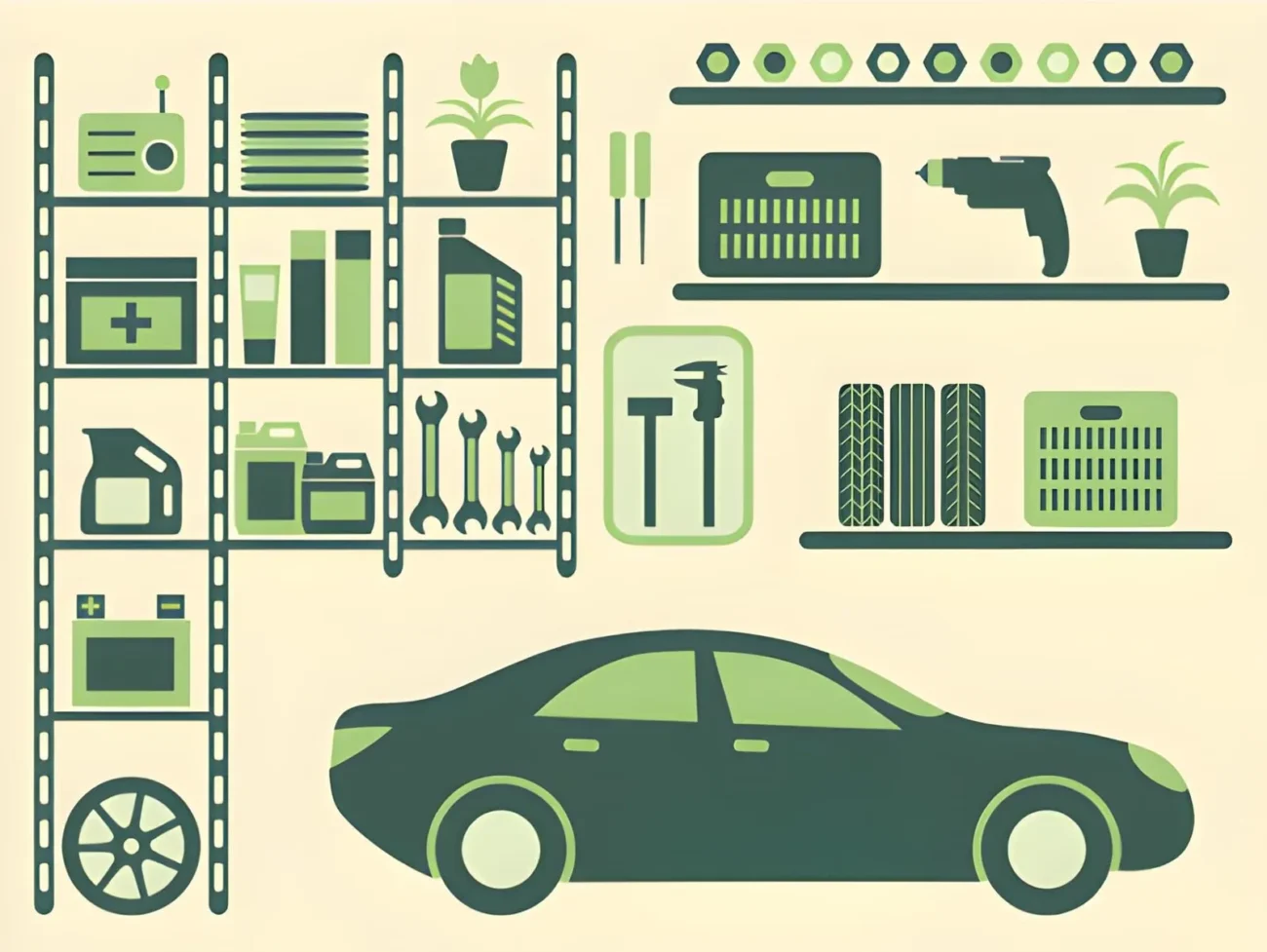
Organizing car storage lets you retrieve a vehicle without moving other stored items first. A clear arrangement keeps access paths open and separates vehicle equipment from unrelated belongings. Here are some ways to organize your storage for cars:
Prepare Your Vehicle
Cleaning the vehicle removes dirt and food residue before storage. Changing the oil and filter addresses routine maintenance before the car remains parked for an extended period. A full gas tank with a fuel stabilizer supports long-term storage.
Tire preparation also affects how the vehicle sits during storage. Removing personal items keeps the cabin clear, while checking the vehicle provides a record of its condition. Separating preparation from storage-area organization makes retrieval clearer later.
Choose Storage Formats
Storage format affects how easily a vehicle reaches its designated space and how the surrounding area functions. Indoor storage protects the vehicle from outdoor exposure, while covered parking provides overhead protection. Climate-controlled storage provides a controlled environment for sensitive vehicles. Drive-up units provide direct access to storage for cars, enabling easy loading and retrieval. Storage type also affects how much surrounding space remains available around the vehicle. Matching the vehicle with its storage format reduces unnecessary movement when accessing it.
Plan Vehicle Access
Start by selecting storage hours that match your expected retrieval schedule. Extended or 24-hour access provides additional flexibility at applicable facilities, while electronic gates use PIN-based entry. Drive-up access reduces the distance between the vehicle and the access point during retrieval. Access planning also involves keeping the area around the vehicle free from unrelated belongings. A clear route reduces the need to rearrange items before moving the vehicle. The following details support an accessible arrangement:
- Keep registration information accessible for vehicle identification.
- Store proof of insurance with other required vehicle documents.
- Record the vehicle make and model for easier identification.
- Keep the license plate number available during retrieval.
- Review facility-specific vehicle access procedures before visiting.
Organizing the surrounding area also preserves access throughout the storage period. Equipment used for maintenance needs a designated location, not placement beside entry paths. Separately stored supplies are easier to locate when the vehicle requires attention.
Organize Retrieval Details
The storage format can affect how easily a vehicle can access the required space and how accessible and usable the surrounding area is. Indoor storage shields the vehicle from the elements, while covered parking protects it from overhead elements. Climate-controlled storage lets you keep sensitive vehicles in a controlled environment.
For easy loading and retrieval, the Drive-up units offer direct access to enclosed car storage. It also determines the space around the vehicle that is available for storage. Helps minimize unnecessary movement when accessing the vehicle to match it to the storage format.
Explore Storage for Cars
Vehicle storage works more efficiently when preparation, placement, and retrieval information follow a consistent system. A labeled record for each vehicle provides a simple reference when several cars share storage arrangements. Review your storage for cars, access requirements, and retrieval records before storing the vehicle. Explore available vehicle storage options and arrange a storage space that fits your car and access requirements.

Ava Mitchell turns celebrity facts into smart, scroll-worthy stories at Star Ledger Pro, backed by 3 years of experience.


