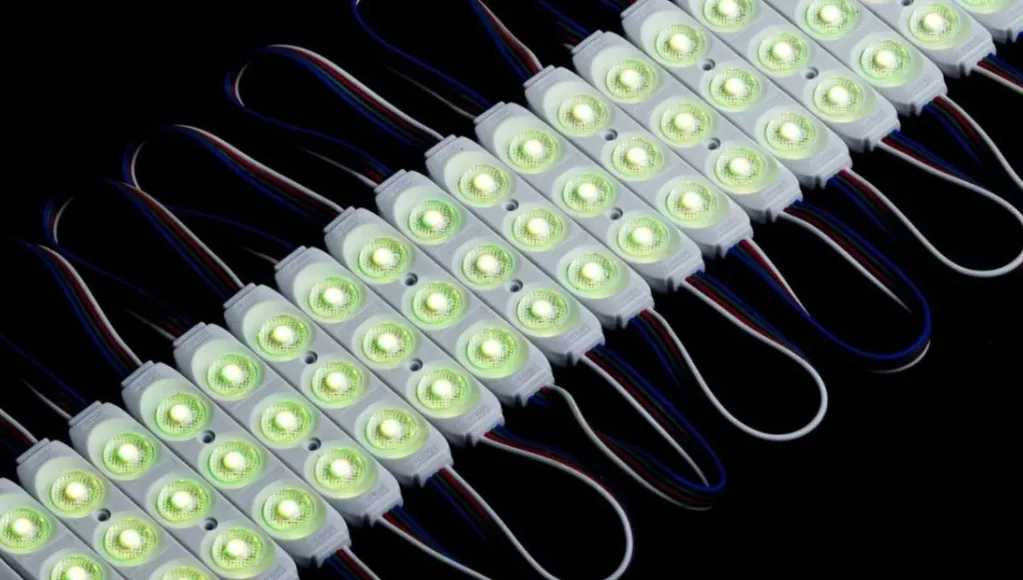
LED modules are important components in many commercial lighting and signage applications. They are commonly considered for illuminated signs, advertising displays, light boxes, and other projects where businesses need suitable LED lighting components. Choosing the right supplier is an important step because product compatibility, technical support, availability, and consistent quality can all influence the success of a lighting project.
Businesses searching for the Best led module supplier should look beyond product prices. A suitable supplier should understand the requirements of different applications and help buyers identify products that match their installation needs.
Understanding the Role of LED Modules
LED modules are lighting components used in various commercial and decorative installations. They can be incorporated into illuminated signage, advertising displays, light boxes, and other lighting systems.
Unlike flexible LED strips, which are often selected for continuous linear illumination, LED modules are considered for applications where lighting needs to be arranged in individual sections or specific layouts.
Their suitability depends on the project design, installation space, electrical requirements, and desired lighting result. Therefore, businesses should understand their application before comparing available products.
Why Supplier Selection Matters
A reliable supplier can make the purchasing process more straightforward by helping businesses identify appropriate products and understand their technical requirements.
For commercial buyers, supplier selection can affect several areas:
Product suitability: The selected modules should match the intended lighting application.
Technical information: Buyers should have access to relevant product specifications before ordering.
Product availability: Consistent availability can help businesses plan projects and manage purchasing schedules.
Communication: Clear communication helps resolve questions about compatibility, installation, and product selection.
Technical support: Assistance with product-related questions can be valuable during project planning.
These considerations are particularly important for businesses that regularly purchase lighting components for multiple projects.
Important Factors to Consider Before Purchasing LED Modules
Before placing an order, buyers should evaluate the technical and practical requirements of their applications.
1. Check Product Specifications
Product specifications should be reviewed carefully before purchasing. Buyers should request the relevant technical information for the specific LED module they are considering.
Depending on the product, important details may include operating voltage, power consumption, dimensions, brightness, LED configuration, and protection rating.
These specifications help determine whether a product is suitable for the intended installation. Buyers should avoid selecting modules based only on product photographs or general descriptions.
2. Consider the Installation Application
Different lighting projects have different requirements. For example, illuminated advertising signs may require a different module arrangement from commercial display installations.
Before selecting a product, consider the available installation space, the required lighting coverage, and the way the modules will be positioned.
For signage and light-box applications, the overall layout should be planned carefully to achieve the desired illumination. Product selection should be based on the actual project design rather than assuming that one module configuration will work for every application.
3. Confirm Electrical Compatibility
Electrical compatibility is an essential part of any LED lighting installation. Buyers should confirm the operating voltage and power requirements of the selected modules.
The power supply must be compatible with the product specifications and the planned installation. Using an unsuitable electrical setup can lead to operational problems.
For projects involving multiple lighting components, buyers should review the complete system requirements before ordering. This includes checking the specifications of the modules and the power supply that will operate them.
4. Ask About Quality and Testing
Product quality is another important consideration for commercial buyers. Businesses should ask suppliers what quality-control procedures and product testing information are available.
Relevant questions may include whether the products are inspected before dispatch, whether technical specifications are documented, and whether the supplier can provide product information for evaluation.
Having access to clear technical documentation makes it easier to compare products and select suitable components for commercial installations.
Working with an LED Module Distributor
An LED module distributor can be a useful purchasing contact for businesses that need access to lighting components for different projects.
When evaluating a distributor, buyers should consider product selection, communication, technical information, and order coordination. A distributor that provides clear product details can help businesses understand their available options before making a purchasing decision.
It is also useful to establish communication about order quantities, availability, delivery arrangements, and any project-specific requirements.
For businesses purchasing regularly, maintaining a professional relationship with a dependable supplier or distributor can make future sourcing more efficient.
Common Applications of LED Modules
LED modules are associated with several commercial lighting applications. Their suitability depends on the product design and technical specifications.
Advertising Signage
Illuminated advertising signs are one application where LED modules may be considered. Businesses can evaluate suitable modules based on sign dimensions, installation layout, and lighting requirements.
Light Boxes
Light boxes use internal illumination to make graphics, images, and advertising content more visible. Selecting compatible lighting components is important for achieving the intended result.
Commercial Displays
Retail displays and promotional installations may also use LED lighting components to highlight products and visual content. Buyers should consider the display design and available installation space when selecting modules.
Decorative Lighting
Certain LED module products may be suitable for decorative installations where lighting needs to be arranged in specific positions. The appropriate product depends on the project requirements and manufacturer specifications.
Questions to Ask Before Placing a Bulk Order
Bulk purchasing requires careful planning. Before confirming an order, businesses should ask suppliers several important questions:
Which LED module models are available for the intended application?
Can the supplier provide complete technical specifications?
What are the operating voltage and power requirements?
Are product samples or evaluation options available?
What quality-control information can be provided?
What are the minimum order quantity and delivery arrangements?
Is technical assistance available if product compatibility questions arise?
Getting clear answers can help buyers compare suppliers and reduce uncertainty before committing to a larger order.
Conclusion
Choosing the right LED module supplier involves more than comparing prices. Businesses should consider product specifications, application requirements, electrical compatibility, quality-control information, availability, and technical support.
Whether purchasing for advertising signage, light boxes, commercial displays, or decorative installations, buyers should confirm that the selected modules meet their project requirements. Taking time to evaluate suppliers and review product information can help businesses make more informed purchasing decisions and establish reliable sourcing relationships.

Ava Mitchell turns celebrity facts into smart, scroll-worthy stories at Star Ledger Pro, backed by 3 years of experience.