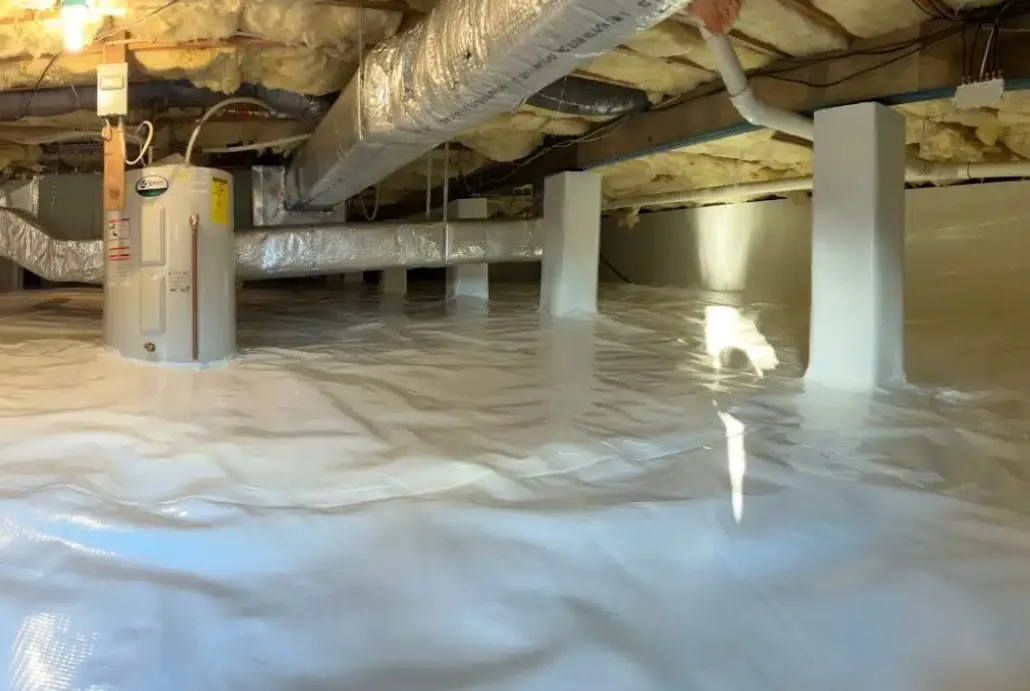
Because air from the basement naturally moves upward into the living spaces of your home, keeping this area dry is key to maintaining healthier indoor air quality. Installing a waterproof barrier as part of a crawlspace encapsulation system helps create a cleaner, more controlled environment beneath your home. Encapsulation seals off the crawlspace from excess moisture, reducing the presence of airborne contaminants, mold, and allergens that circulate throughout your living areas. Here are a few ways crawlspace encapsulations help improve your home’s air quality:
Impedes Harmful Gases
Crawlspace encapsulations create an airtight barrier over walls and floors. This barrier limits the movement of soil gases, including radon, into your home. Radon is a colorless, odorless gas that poses health risks with prolonged exposure. Encapsulation also blocks the upward movement of contaminants trapped in the soil beneath your house, such as volatile organic compounds, fertilizers, and pesticides. Sealing the crawlspace reduces pathways for outdoor pollutants. Such pollutants include pollen, dust, and wildfire smoke that enter your living space. By limiting these sources of contamination, crawlspace encapsulation helps maintain cleaner indoor air.
Prevents Mold Growth
Crawlspace encapsulation uses a heavy-duty vapor barrier to cover exposed surfaces, seal gaps, and reduce moisture intrusion. Professional contractors also install crawlspace dehumidifiers to maintain consistent humidity levels. A dry crawlspace discourages mold and mildew growth.
By limiting moisture and controlling mold growth, encapsulation reduces the number of airborne spores that enter the living space. This supports better indoor air quality and helps reduce exposure to common allergens. A properly maintained dry crawlspace also limits conditions that allow dormant mold spores to become active during periods of high humidity.
Moisture-related problems often cause musty odors from decaying wood, mildew, and mold. Encapsulation addresses the source of these odors by reducing the conditions that support mold and mildew growth. The result is cleaner, fresher-smelling air throughout the home.
Reduces Pest Invasion
Sealing a crawlspace helps block entry points for pests such as insects, rodents, and termites. During encapsulation, contractors install durable vapor barriers and rigid wall insulation that cover exposed areas; they also help close gaps where pests often enter or nest. By limiting access to the crawlspace, encapsulation reduces the chance of pests leaving behind droppings, nesting materials, and other contaminants that affect indoor air quality.
Crawlspace encapsulation also reduces moisture levels; this makes the environment less suitable for dust mites and moisture-dependent pests. Lower humidity levels limit the conditions that support termites, beetles, and other insects that rely on damp areas for survival. Reducing pest activity in the crawlspace helps decrease the spread of related allergens and contaminants throughout the home.
Prevents Temperature Fluctuations
Crawlspace encapsulation includes the installation of insulation between the ground and the floor above; this helps reduce the impact of outdoor temperature changes on the home. The added insulation creates a more stable environment beneath the living space, helping maintain more consistent indoor temperatures throughout the year. Heating and cooling systems operate under more balanced conditions instead of compensating for large temperature swings. A more stable indoor environment also supports consistent HVAC performance, including regular air circulation and filtration. Encapsulation reduces drafts and temperature variations that contribute to uneven airflow and uncomfortable areas within the home. By limiting air movement from the crawlspace and maintaining steadier temperatures, encapsulation improves overall comfort and supports cleaner indoor air.
Schedule Crawlspace Encapsulations
Creating a dry barrier between the crawlspace floor and the home’s floorboards helps control moisture levels. Crawlspace encapsulation covers exposed soil and reduces moisture transfer from the ground; this process creates a more stable environment beneath the living space. Work with a professional contractor to get encapsulation services in your home.

Ava Mitchell turns celebrity facts into smart, scroll-worthy stories at Star Ledger Pro, backed by 3 years of experience.


