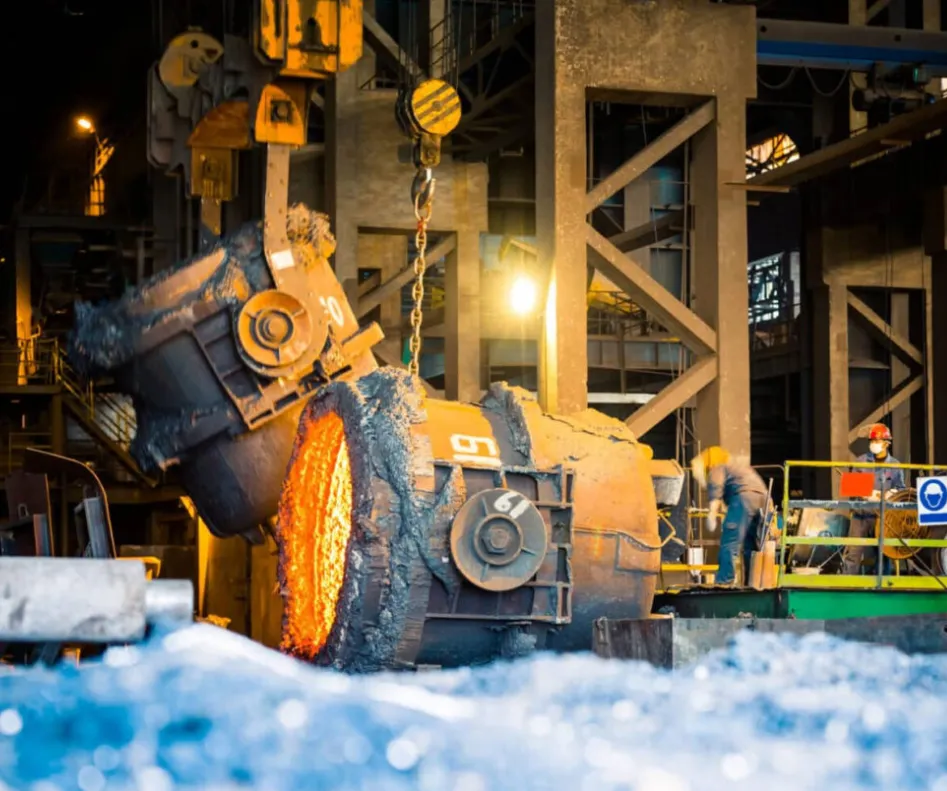
Alloy steel has become a cornerstone in modern manufacturing, offering unparalleled strength, flexibility, and resilience. Its unique composition allows for a wide range of applications, from automotive to aerospace industries, driving innovation and efficiency. Notably, 4150 alloy steel, supplied by Specialty Steel Company, stands out for its high strength and durability, making it a preferred choice in demanding industrial applications. Specialty Steel Company, with over 40 years of experience, has established itself as a reliable source for high-strength alloys, including 4140 and 4150 steels. Their extensive inventory and commitment to quality have made them a trusted partner for industries requiring top-tier materials.
Automotive Industry: Driving Performance and Safety
The automotive sector leverages alloy steel to enhance vehicle performance and safety. High-strength, low-alloy (HSLA) steels reduce vehicle weight, improving fuel efficiency and meeting stringent emission standards. Notably, Cleveland-Cliffs Inc. successfully replaced aluminum with steel in automotive stamping equipment without requiring costly retooling, showcasing alloy steel’s versatility in manufacturing processes.
Beyond structural uses in vehicle frames and critical safety components, alloy steels are integral to the production of transmission gears, drive shafts, and high-performance engine parts. Modern advances in alloy steel formulations help engineers create lighter vehicles without sacrificing safety, offering improved crash resistance and energy absorption in collisions. The ability of alloy steel to be tailored to meet specific mechanical requirements ensures manufacturers can respond to increasingly tough regulatory standards. Ongoing research into alloy steel microstructure and surface treatments further enhances wear resistance and lifespan, which in turn reduces long-term maintenance costs and total cost of ownership for commercial fleets and everyday drivers alike.
Aerospace Sector: Reaching New Heights
In aerospace, alloy steel’s strength-to-weight ratio is critical. Advanced alloys withstand extreme temperatures and pressures, ensuring safety and performance. Innovations like Foundation Alloy’s solid-state metallurgy technology have led to ultra-high-performance metals, enabling faster development and deployment of aerospace components.
Specialty alloys are also utilized for landing gear, turbine shafts, fasteners, and actuator systems, each requiring exceptional fatigue resistance. The application of alloy steel in the aerospace sector isn’t limited to aircraft; it also extends to spacecraft components and satellites. Here, longevity and reliability are paramount, as repairs or replacements are impractical. In recent years, the inclusion of elements such as chromium and molybdenum in aerospace-grade steels has further refined corrosion resistance, enabling parts to withstand years of exposure to fuel, hydraulic fluids, and the extreme environments encountered both in the atmosphere and beyond. As aviation technology advances, so too does the call for steels with even tighter tolerances and enhanced reliability.
Construction: Building the Future
Alloy steel’s durability and flexibility make it ideal for construction. It supports structures that endure environmental stresses while allowing for innovative architectural designs. The development of cold-formable, copper-alloyed austenitic steel casts with TRIP/TWIP properties has paved the way for safer and more sustainable construction components.
In bridges, skyscrapers, and infrastructure projects, alloy steel’s high yield strength allows for slimmer columns and longer spans, maximizing usable space. Modern skyscrapers and large-scale civil engineering works depend on alloy steels to deliver both the robustness and malleability necessary for earthquake resistance and wind load performance. Additionally, steel’s recyclability and the introduction of greener manufacturing processes contribute to the sustainability credentials important to contemporary construction. With the continued development of weathering steels and advanced welding techniques, today’s alloy steel structures are longer-lasting and more cost-effective over their lifecycle, benefiting public works and urban development initiatives.
Renewable Energy: Powering Sustainability
Renewable energy systems increasingly depend on alloy steel because they operate under demanding conditions where ordinary materials may struggle with fatigue, corrosion, vibration, and heavy loads. From wind farms and solar installations to offshore renewable projects, alloy steels provide the combination of strength, toughness, durability, and corrosion resistance required for long-term operation.
In the wind energy sector, alloy steel is commonly used in critical components such as turbine shafts, gears, bearings, fasteners, and structural assemblies. These components must withstand continuous rotation, fluctuating wind loads, temperature changes, and mechanical fatigue. Advanced alloy steel grades can provide excellent fatigue resistance, helping turbines remain reliable throughout years of operation.
Wind turbine towers and supporting structures also benefit from improvements in modern steel technology. High-strength steels allow engineers to create structures capable of supporting increasingly large turbine blades and generators while controlling overall material usage. This becomes particularly important as offshore turbines grow larger and are installed in more challenging marine environments.
Offshore renewable energy presents another important application. The introduction of specialized alloys for subsea umbilicals, connectors, fasteners, and supporting equipment can improve resistance to seawater corrosion, pressure, and mechanical stress. Better material performance can contribute to improved safety while potentially reducing costly offshore inspection and maintenance requirements.
Solar energy infrastructure also makes extensive use of steel. Strong yet formable steel can be used for solar panel frames, mounting systems, trackers, brackets, and structural supports. These components must survive wind, rain, temperature fluctuations, and prolonged outdoor exposure while maintaining accurate panel positioning.
Another important development is the improvement of machinability and surface integrity in alloy steels. Better manufacturing characteristics allow engineers to create more precise turbine and energy-system components. Improved surface finishes can also reduce premature wear and help extend the service life of moving parts.
Sustainability is influencing alloy development as well. Steel manufacturers are increasingly exploring lower-carbon production methods, recycled feedstocks, energy-efficient processing, and alloys designed for longer service lives. Since steel is highly recyclable, renewable energy infrastructure made with carefully selected alloy steels can support circular-economy objectives when components eventually reach the end of their useful lives.
As renewable energy capacity continues to expand globally, advanced alloy steels are likely to remain essential materials for creating larger, stronger, safer, and more efficient energy infrastructure.
Additive Manufacturing: Shaping Innovation
Additive manufacturing, commonly known as 3D printing, is opening new possibilities for alloy steel applications. Unlike conventional subtractive manufacturing, where material is removed from a larger piece, additive manufacturing builds components layer by layer. This approach can reduce material waste while allowing manufacturers to produce geometries that would be difficult or expensive to achieve using traditional machining.
Processes such as metal binder jetting, laser powder bed fusion, and directed energy deposition are increasingly being explored for steel components. The qualification of steels such as 4140 low-alloy steel for additive manufacturing demonstrates how established engineering materials can be adapted to newer production technologies.
4140 steel is valued for its combination of strength, toughness, fatigue resistance, and wear performance. Producing components from this type of steel through additive manufacturing could make it easier to manufacture complex industrial parts while reducing the number of separate components required in an assembly.
One of the biggest advantages is rapid prototyping. Engineers can develop a digital model, manufacture a prototype, test its performance, and quickly revise the design. This shortens development cycles and enables companies to evaluate multiple configurations before committing to expensive tooling or mass-production processes.
Additive manufacturing also provides considerable design freedom. Engineers can create internal channels, lightweight lattice structures, topology-optimized components, and customized geometries that conventional manufacturing techniques may not easily accommodate. Such capabilities have potential applications in automotive engineering, aerospace, energy equipment, tooling, robotics, medical devices, and heavy machinery.
Another potential advantage involves spare parts and supply chains. Instead of maintaining large inventories of rarely used components, manufacturers could eventually maintain qualified digital designs and produce certain replacement parts closer to the location where they are needed. For industries operating remote facilities, this approach could potentially shorten lead times and reduce inventory requirements.
However, additive manufacturing with alloy steel also presents challenges. Manufacturers must carefully control powder quality, printing parameters, heat treatment, porosity, dimensional accuracy, residual stresses, and surface finish. Rigorous testing and quality assurance remain particularly important when printed components are intended for safety-critical applications.
As metal additive manufacturing becomes more mature and the selection of printable alloy steels expands, the technology could complement rather than completely replace conventional manufacturing. Combining 3D printing, machining, forging, and heat treatment may provide manufacturers with greater flexibility when producing the next generation of high-performance steel components.
Future Trends in Alloy Steel Applications
Looking ahead, demand for specialized materials such as 4150 alloy steel is likely to remain important wherever manufacturers require high strength, toughness, wear resistance, and dependable performance under demanding mechanical conditions. Grades in the chromium-molybdenum family can be particularly useful for components subjected to heavy loads, repeated stresses, and challenging operating environments.
Suppliers such as Specialty Steel Company serve industries that require alloy steel in different sizes, forms, and specifications. Access to appropriate material grades is important because selecting steel involves much more than simply choosing the strongest available option. Engineers must consider machinability, weldability, hardenability, fatigue behavior, heat-treatment response, operating temperature, corrosion exposure, and overall production cost.
The future of alloy steel will also be shaped by advances in materials science and computational engineering. Artificial intelligence and machine-learning tools are increasingly being investigated for predicting material properties, identifying promising alloy compositions, and optimizing manufacturing parameters. Instead of relying entirely on lengthy trial-and-error development cycles, engineers may increasingly use computational models to narrow down potential formulations before physical testing.
Another emerging area involves smart materials and advanced coatings. Researchers are exploring materials and surface systems capable of providing better resistance to corrosion, cracking, wear, and extreme temperatures. While genuinely self-healing structural steels remain an emerging research area rather than an everyday industrial solution, related developments could eventually contribute to longer component life and lower maintenance requirements.
Sustainability will be equally influential. Steel producers face growing pressure to lower emissions throughout the production process. Greater use of recycled steel, renewable electricity, electric-arc furnaces, alternative ironmaking technologies, and more efficient heat-treatment processes could help reduce the environmental footprint associated with advanced steel production.
Closed-loop recycling could become increasingly important as well. Manufacturers may design products with eventual recovery and recycling in mind, helping valuable alloying elements remain within the industrial materials cycle rather than being lost as waste.
Digitalization represents another major trend. Modern steel manufacturing facilities are increasingly adopting sensors, automated inspection, robotics, predictive maintenance, digital twins, and real-time data analytics. These technologies can help manufacturers monitor production variables more accurately and maintain consistent material quality.
Traceability may also improve. Digital material records could allow manufacturers to track information about a steel component’s chemical composition, processing history, heat treatment, inspection results, and performance characteristics throughout its lifecycle. Such capabilities could be particularly valuable in highly regulated or safety-sensitive industries.
Future alloy steels may therefore be designed not simply to achieve maximum strength but to provide an optimized balance of performance, manufacturability, affordability, durability, recyclability, and environmental responsibility. This approach could expand opportunities across sectors such as renewable energy, transportation, construction, defense, healthcare, industrial machinery, and advanced electronics.
Conclusion
Alloy steel’s remarkable combination of strength, toughness, versatility, and adaptability continues to make it an essential engineering material. Its growing role in renewable energy demonstrates how established materials can support modern sustainability goals, while additive manufacturing shows how new production technologies can dramatically expand the possibilities for steel component design.
The next generation of alloy steels will likely benefit from improvements in material modeling, artificial intelligence, advanced manufacturing, surface engineering, recycling, and lower-carbon steelmaking. At the same time, manufacturers will continue refining existing grades to achieve better fatigue resistance, machinability, corrosion performance, and service life.
Rather than being replaced by newer materials, alloy steel continues to evolve alongside them. From enormous offshore wind turbines to precisely manufactured 3D-printed components, its ability to meet demanding engineering requirements keeps it relevant across a broad range of industries.
As industrial priorities shift toward higher efficiency, longer service life, reduced waste, and lower environmental impact, advanced alloy steels are positioned to play an important role in future manufacturing. Continued innovation in both alloy composition and production technology will help engineers create stronger, more efficient, and more sustainable products for decades to come.

Ava Mitchell turns celebrity facts into smart, scroll-worthy stories at Star Ledger Pro, backed by 3 years of experience.


