Key Takeaways
- Quick pre-trip inspections can reveal fluid leaks, loose connections, and missing safety items before departure.
- Monthly checks help identify gradual wear on batteries, hoses, trailer components, and dock equipment.
- Engine service should follow the manufacturer’s maintenance intervals and approved products.
- Safety gear, trailer equipment, and electrical systems deserve the same attention as the engine.
- Fuel, steering, overheating, wiring, and structural concerns should be evaluated by a marine technician.
From early spring launches near Warsaw to busy summer weekends on Lake of the Ozarks, Missouri, boat owners benefit from a maintenance routine that is simple, repeatable, and suited to freshwater boating. When a problem goes beyond a visual check or routine cleaning, searching for outboard motors repair near me can help owners find qualified assistance before a minor concern interrupts time on the water.
A dependable boat is not maintained in one long weekend. It is maintained through short checks before each trip, regular attention during the season, and timely service before storage. This approach makes it easier to spot leaks, worn parts, weak batteries, and issues with safety equipment while they are still manageable.
Why a Maintenance Schedule Matters for Missouri Boaters
Missouri weather, changing water levels, shoreline debris, and frequent trailering can put steady demands on a boat and its equipment. A loose battery terminal or cracked hose may be easy to correct in the driveway, but frustrating at the launch ramp. Keep a written log of dates, engine hours, parts replaced, and observations, then use the owner’s manual as the primary guide for service timing.
Owners shopping for an upgrade can also compare upkeep needs while looking at boats for sale in Missouri, including storage requirements, trailer condition, engine type, and the accessibility of routine service points.
What to Check Before Every Trip on Missouri Waters
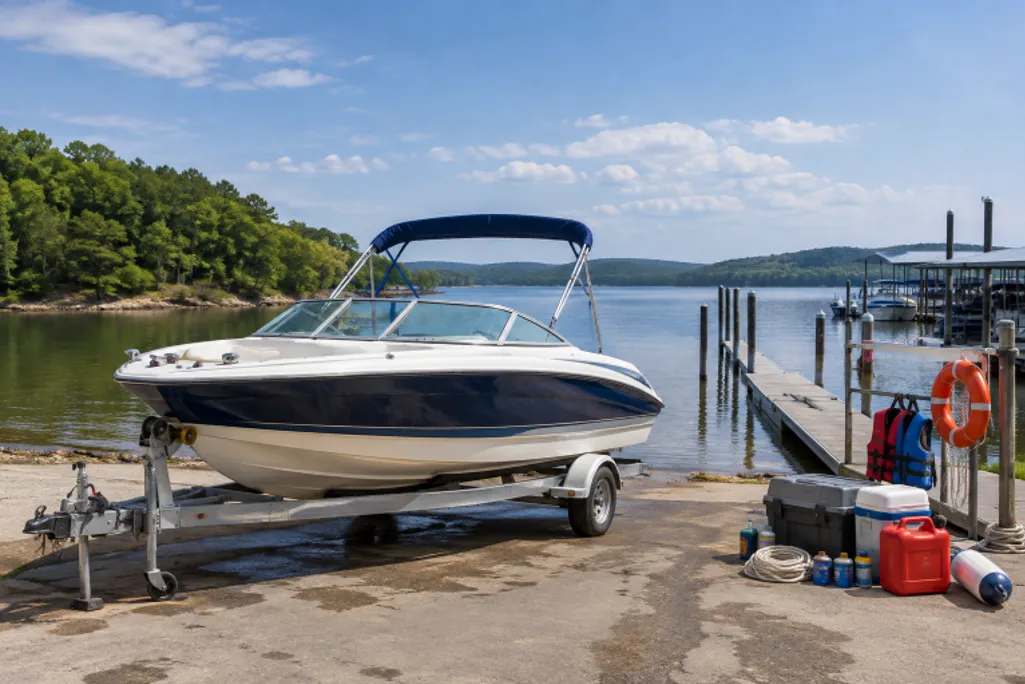
Build a five-minute walkaround into every Missouri boating day. Look in the bilge for unusual water, oil, or fuel odor. Confirm the drain plug is installed, check visible hoses and fluid levels, and inspect the propeller for damage or fishing line. Test navigation lights, the horn, bilge pump, and communication devices. Make sure each passenger has a properly fitting life jacket, review the forecast, and tell someone where you expect to boat and when you plan to return.
Monthly Boat Maintenance Checks
Monthly care is useful even when the boat seems to be running well. Inspect battery terminals, charging connections, belts, clamps, hoses, fuel lines, and metal fittings for corrosion or wear. Check that the anchor, dock lines, and fenders remain serviceable. Clean canvas, upholstery, storage lockers, and drainage areas so moisture and mildew are easier to notice. Restock the first-aid kit and confirm emergency supplies are dry, complete, and easy to reach.
Engine and Fuel System Care
Follow the engine manufacturer’s schedule for oil, filters, lubricants, cooling-system care, and fuel recommendations. Keep the engine compartment clean enough to reveal any new leaks, and pay attention to fuel odors, overheating alarms, cloudy fluids, unusual vibrations, or weak cooling water flow. Flush the engine only when the manufacturer calls for it and in the recommended manner. Record the service date and engine hours after each major task, especially before a high-use holiday weekend.
Electrical Systems and Battery Checks
Electrical issues can leave an otherwise ready boat unable to start or operate essential equipment. Inspect the terminals for corrosion, ensure the battery connections are secure, and verify that the battery switches work correctly. Test pumps, gauges, lights, and charging functions before leaving home. Do not continue using wiring that is hot, melted, cracked, loose, or poorly protected. Electrical repairs involving damaged wiring or repeated battery failure are better handled by a qualified technician.
Safety Gear and Required Equipment
Maintenance includes equipment that protects passengers, not just mechanical systems. Inspect life jackets for damage, mildew, secure straps, and appropriate fit. Check fire extinguishers, signaling devices, sound-producing equipment, registration documents, and navigation lights. Requirements may vary by vessel and operating area, so confirm the rules that apply to your boat before departure.
A voluntary outside review can catch overlooked items. Boat owners can use free guidance on vessel safety checks to understand how an inspection can help identify safety gaps before the season gets busy.
Trailer Inspection Before Launch
A well-maintained boat still needs a safe trip on a trailer to the ramp. Before towing, check tire pressure, tread, sidewalls, and the spare tire. Test trailer lights and brakes when equipped. Inspect wheel bearings for heat, noise, or excessive movement, and secure the hitch, safety chains, winch strap, bow connection, and transom straps. A brief check at home is much easier than solving a trailer problem beside a crowded Missouri launch ramp.
Seasonal Maintenance Planning for Missouri’s Boating Calendar
Break maintenance into predictable windows. Before spring launch, inspect batteries, fluids, safety gear, engine systems, and trailer parts. During peak season, repeat pre-trip checks and track engine hours. Before fall storage, wash the boat, remove wet gear, inspect for damage, and address small repairs. Winter storage steps should match the boat’s manual and local temperatures. The 2026 boating calendar can also help owners plan preparation around major boating periods.
When to Call a Marine Technician
Stop troubleshooting and arrange professional help if you find a fuel leak, a strong fuel odor, persistent overheating, warning alarms, steering that feels loose or stiff, unexplained water intrusion, repeated charging failures, smoke, excessive vibration, or loss of power. These concerns can involve systems in which guesswork creates safety risks or causes more extensive damage.
Common Questions About Boat Maintenance in Missouri
How Often Should a Boat Be Serviced?
Service timing depends on the engine, hours of use, storage conditions, and manufacturer instructions. Track both calendar dates and engine hours.
What Should Be Checked Before Launching?
Check the drain plug, bilge, fuel system, battery, lights, safety equipment, propeller, trailer connections, and weather conditions.
Can Boat Owners Handle Basic Maintenance?
Owners can usually handle cleaning, visual inspections, battery checks, and safety-equipment reviews. Fuel, steering, complex electrical, and major engine work should be left to trained professionals.
What Is the Most Common Maintenance Mistake?
Focusing only on the engine can leave trailer, battery, safety gear, and small leak problems unnoticed. A whole-boat routine is more dependable.
Conclusion
Reliable Missouri boating comes from small habits repeated throughout the season. A practical schedule helps catch problems early, keeps passengers better prepared, and reduces preventable delays. Start with a pre-trip inspection, keep clear maintenance records, and make seasonal care part of the boating routine rather than a last-minute task.

Ava Mitchell turns celebrity facts into smart, scroll-worthy stories at Star Ledger Pro, backed by 3 years of experience.


